
Before diving into the blog, here are the key takeaways that will help you understand the most important factors of this blog regarding equity mutual funds in India.
Key Takeaways for the Best Equity Mutual Funds in India
- Equity mutual funds in India invest mainly in shares of listed companies. For tax purposes, an equity-oriented fund holds at least 65% in domestic equity.
- In simple words, there is no single “best” fund for everyone. The best equity mutual funds in India for you match your goal, time horizon and risk comfort.
- Equity schemes drew ₹38,306.55 crore in net inflows in September 2026, and SIP contributions hit a record ₹32,490 crore (AMFI Reports).
- As of FY 2026-27, equity fund gains held over 12 months are taxed at 5%above ₹1.25 lakh a year. Gains within 12 months are taxed at 20%.
- Shortlist funds on category fit, rolling returns, expense ratio and consistency, not on last year’s return alone.
- Plan to stay invested for at least five to seven years.

What are Equity Mutual Funds in India?
Equity mutual funds in India are schemes that pool money from many investors and invest mainly in shares of listed companies. A SEBI-registered fund manager runs the portfolio, and each unit is priced at its NAV (Net Asset Value). They aim for long-term growth but carry market risk, so returns are never guaranteed.
Participation is rising. AMFI data released on 12 October 2026 shows equity schemes received net inflows of ₹38,306.55 crore in September, about 31% higher than August. About 10.06 crore SIP accounts were contributed during the month.
The same data carries a caution. Total industry assets fell 5.1% to ₹82.64 lakh crore in September, which shows that equity values can move down as well as up.
What are the Types of Equity Mutual Funds in India?
This is a very important question for all investors before investing in mutual funds. Actually, SEBI classifies equity funds by where they invest. The main types are large cap, mid cap, small cap, flexi cap, multi cap, ELSS and sectoral or thematic funds. Large caps are generally steadier, while mid and small caps offer higher growth potential with sharper swings.
Here is the table below to understand investment rules and risk levels.
| Category | Minimum investment rule (SEBI) | Risk level | Who it may suit |
| Large Cap | 80% in the top 100 companies by market cap | Moderate to high | First equity fund, core holding |
| Mid Cap | 65% in companies ranked 101 to 250 | High | Goals 7 years or more away |
| Small Cap | 65% in companies ranked 251 onward | Very high | Long horizon, high risk tolerance |
| Flexi Cap | 65% in equity, any market cap | High | One-fund core portfolio |
| Multi Cap | 75% in equity, at least 25% each in large, mid and small caps | High | Built-in diversification |
| ELSS | 80% in equity, 3 year lock-in | High | Tax saving under Section 80C (old tax regime) |
These thresholds come from SEBI’s scheme categorisation framework and the later multi cap circular. Confirm the latest norms on the SEBI website before investing.
Which are the Best Equity Mutual Funds in India?
So, we have already discussed the different types of equity mutual funds. Now, when it comes to choosing the single best equity mutual fund in India for everyone, we cannot say that any one fund is the best for all investors. The best fund is the one that aligns with your financial goals, investment time horizon, and risk tolerance, while maintaining a consistent track record against its benchmark across different market cycles. A fund that tops the performance charts one year may fall behind the next.
We do not publish a fixed “top 10” list, because rankings go stale within months. Instead, use these filters to judge any scheme:
- Category fit: Compare a fund only with others in its SEBI category.
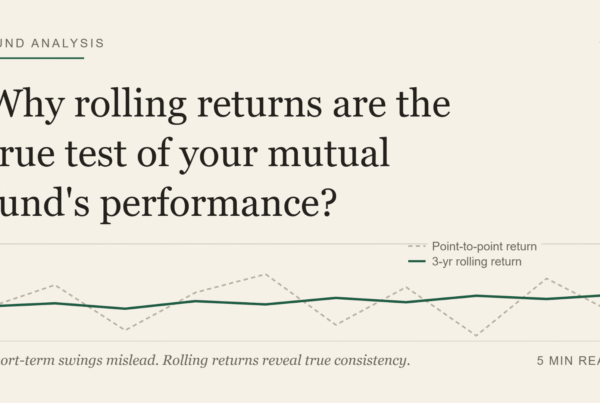
- Rolling returns: Look at 3, 5 and 7 year rolling returns against the benchmark’s Total Return Index (TRI), not just a single point-to-point number.
- Expense ratio: A lower cost leaves more of the return with you.
- Fund manager and AMC process: Check tenure, stability and investment style.
- Portfolio concentration: Review the top 10 holdings and sector weights.
- Riskometer: Make sure the risk label fits your comfort level.
How Do Equity Mutual Funds Work?
It is very simple to understand how it works:
Step 1: Investors put in money as a lump sum or through an SIP (Systematic Investment Plan).
Step 2: After pooling the money, you will get units at the scheme’s NAV (Net Asset Value). If you are not aware of NAV, this is the per-unit value of a scheme’s net assets minus liabilities, divided by units outstanding.
Step 3: As per limits in the SID(Scheme Information Document) and according to the scheme’s stated objective, the manager buys shares
Step 4: Now, if the shares are rising in value, NAV rises, and the reverse is also true; then returns reflect the portfolio.
Step 5: After 4 steps, you can redeem when you need to by selling your units on any business day at the applicable NAV.
Equity is one of several investment ideas, so decide how much of your overall portfolio should sit in it before you pick a scheme. Your emergency fund and near-term goals belong elsewhere.
How do I Choose Equity Mutual Funds for My SIP?
Start with your goal and time horizon, pick a category that fits your risk comfort, shortlist two or three funds using rolling returns, expense ratio and consistency, then begin a monthly SIP. Review once a year instead of reacting to every market move.
- Define the goal and the date. A child’s education in 12 years needs a different plan from a house down payment in 4 years.
- Choose the category. Match the SEBI category to your horizon and risk comfort.
- Shortlist two or three schemes. Use the filters above and the AMC’s factsheet.
- Set the SIP amount and date. Pick an amount you can sustain through market falls, and align the debit date with your salary credit.
- Review annually. Rebalance or replace a fund only when it lags its benchmark and category for a sustained period, or when your goal changes.
For a deeper walkthrough, read our guide on how to choose mutual funds for SIP.
Which Equity Mutual Funds Suit First-Time Investors?
First-time investors usually begin with large cap, flexi cap or index funds, because they spread money across established companies and are easier to understand. Mid and small cap funds are better added later, in smaller proportions, once you are comfortable with market volatility.
Before you commit money, complete your KYC, add a nominee and decide on a monthly amount you will not need for several years. Our overview of mutual fund investment plans for beginners covers these basics step by step.
How are Equity Mutual Funds Taxed in 2026-27?
As of FY 2026-27, equity mutual fund units held for more than 12 months attract long-term capital gains tax of 12.5% on gains above ₹1.25 lakh a year. Units sold within 12 months attract short-term capital gains tax of 20%. Surcharge and cess apply. Confirm with the latest notification.
| Holding period | Gain type | Tax rate | Provision |
| Up to 12 months | Short-term (STCG) | 20% | Section 111A |
| More than 12 months | Long-term (LTCG) | 12.5% on gains above ₹1.25 lakh per year | Section 112A |
Example: If you book ₹3 lakh of long-term gains in a year, ₹1.25 lakh is exempt, ₹1.75 lakh is taxable, and the tax is ₹21,875 before cess.
The Income-tax Act, 2025 applies from 1 April 2026 and renumbers sections, so check the current section references with a chartered accountant. Reports on the Union Budget 2026 indicate no change to these equity rates, but tax rules can change, so verify before you redeem.
How Risky are Equity Mutual Funds, and How Long Should I stay Invested?
Equity mutual funds carry market risk, and values can fall sharply in the short term. SEBI’s riskometer labels schemes from low to very high risk. Equity funds are commonly held for at least five to seven years, so that a market fall has time to recover.
- Volatility is normal. Industry assets fell 5.1% in September 2026, yet monthly SIP contributions still reached a record.
- SIPs smooth your entry price. A fixed monthly amount buys more units when prices are low and fewer when they are high.
- Diversify across categories. Avoid putting all your money into one theme or one cap segment.
- Keep a safety net. Hold an emergency fund before you start investing in equity.
What Mistakes Should I Avoid When Investing in Equity Mutual Funds?
- Chasing the fund with the highest one-year return.
- Holding too many overlapping funds instead of two to four well-chosen ones.
- Stopping the SIP during a market fall.
- Investing money you need within three years.
- Ignoring the expense ratio and the riskometer.
Frequently Asked Questions
Can I start an equity mutual fund SIP with just ₹500 a month?
Yes. Many equity mutual fund schemes accept SIPs from ₹100 to ₹500 a month, though minimum amounts differ by scheme. You need completed KYC and a bank mandate. Starting small lets you learn how market swings feel before you increase the amount. Check the scheme information document for the exact minimum.
Can I set off a loss on equity mutual funds against other gains?
Yes. A short-term capital loss can be set off against both short-term and long-term gains. A long-term capital loss can be set off only against long-term gains. Unadjusted losses can be carried forward for eight assessment years, provided you file your return on time. Confirm details with a chartered accountant.
Is switching from one equity fund to another taxable?
Yes. A switch is treated as a redemption from the first fund and a fresh purchase in the second, so capital gains tax can apply to the gains. Your holding period decides whether 20% short-term or 12.5% long-term tax applies. Check the holding period before switching, especially for units under 12 months.
Will my SIP stop if I miss instalments?
It can. Many fund houses cancel a SIP after a few consecutive failed debits, commonly three, though rules vary by AMC. Missed instalments also break the habit that makes SIPs work. Keep enough balance on the debit date and set a reminder, or ask your distributor to check the AMC’s policy.
Should I stop my SIP when the market falls?
Usually not. When markets fall, a fixed SIP buys more units at lower prices, which lowers your average cost over time. In September 2026, industry assets fell 5.1%, yet SIP contributions still hit a record ₹32,490 crore, per AMFI. Stop only if your goal, income or risk capacity has changed.
Do direct plans of equity mutual funds give higher returns than regular plans?
Direct plans have a lower expense ratio because no distributor commission is built in, so their NAV is usually higher over time. Regular plans include distributor commission for guidance, onboarding and reviews. The difference is the cost gap, not manager skill. Choose based on whether you want to act alone or with advice.
Build Your Equity Plan With Confidence
The right equity mutual fund is the one you can hold through good and bad markets. If you want help shortlisting schemes for your goals, speak to the team at Wealth Redefine Financial Services LLP.
Sources: AMFI monthly data for September 2026 (released 12 October 2026); SEBI scheme categorisation and multi cap circulars; Union Budget 2026 capital gains provisions.
Disclaimer: Mutual fund investments are subject to market risks. Read all scheme related documents carefully. Past performance may or may not be sustained in the future. This article is for education and is not investment advice. Wealth Redefine Financial Services LLP is an AMFI-registered Mutual Fund Distributor (ARN 167127, BSE Star MF Partner).